25 oct 2009

Interferencias de otros mundos en aparatos de radio y TV

Nicola Tesla y Marconi a principios del siglo XX tuvieron el privilegio de ser los primeros genios en crear aparatos de radio. Pero atendiendo a curiosos datos recogidos en la historia, parece que no erán los únicos, que tendria que haber otro emisor desconocido. En este monográfico tratamos el tema de las interferencias tanto en aparatos de radio como de TV de origen aparentemente imposible para la mas alta tecnología del momento. Adéntrate en este asunto poco divulgado con el monográfico de la semana.


 http://www.ivoox.com/061-interferencias-otros-mundos-aparatos-audios-mp3_rf_142133_1.html


19 oct 2009

¿Dinosaurios vivos en la actualidad?

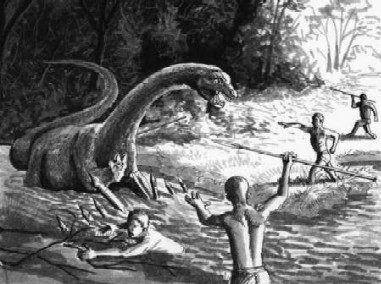
¿Existen dinosaurios vivos en la actualidad?, la respuesta es clara: NO. ¿pero qué se esconde tras el llamado Mokele-Mbembe, del Kongamato o "Nessie", nuestro querido montruo del lago Ness?. Pues posiblemente criaturas criptozoologicas, es decir, animales aún no catalogados por la ciencia. Adentrate en el mundo perdido con este programa. 


Recreación de cómo podría ser el Mokele-Mbembé


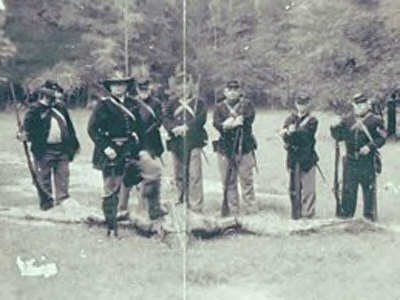
Dos de las muchas fotografías falsas que existen sobre el Thunderbird.


11 oct 2009

Luces populares

Un enigma tan antiguo casi como el hombre. Unas luces, a las que según el sitio se les llama "lampariles de muerte", "luces de difunto" o "luminarias" en general, que acosa y perturban a testigos en diferentes lugares del globo terrestre. Desde los casos españoles del Pardal o Ribera Oveja, hasta los internacionales de Hessdalen, Latinoamérica y Norteamérica. Un monográfico exhaustivo donde exponemos al detalle la naturaleza del fenomeno y sus posibles explicaciones.

http://www.ivoox.com/059-el-enigma-luces-populares-audios-mp3_rf_135403_1.html


Luces de Hessdalen


Documental sobre las Luces de Marfa


Fuego de San Telmo


Rayo globular

4 oct 2009

El caso del hombre de Somerton

 En Diciembre de 1948 en una playa de Australia apareció el cadaver de un hombre, un hombre que a dia de hoy se sigue sin saber de quién se trata. Un caso criminal bien estudiado en el que se mezclan pistas que bien podrian ser sacadas de una novela de misterio, cuando aparecen códigos extraños que nadie sabe descifrar.
Tambien estrenamos sección, la de What The Fake!?, en la cual hoy trataremos sobre la leyenda urbana tambien australiana de las desapariciones en Hanging Rock. ¡No os lo perdais!


http://www.ivoox.com/058-el-caso-del-hombre-somerton-audios-mp3_rf_131498_1.html


29 sept 2009

Los encuentros en 3ª fase más absurdos

En el monográfico de esta semana hablamos de los encuentros de 3ª fase mas surrealistas de todos los tiempos, como el caso de “el monstruo de Flatwoods”, el caso de Kelly-Hopkinsville, el incidente de Voronezh, o el inquietante caso del “tio que vino del cielo y te ofrecia una Xbox”: el encuentro de Imjärvi. Dani nos recomendara una obra de ciencia-ficción que ya es un clasico: Solaris, y con Alex nos iremos de excursión a la mágica montaña catalana de Montserrat. 


MONSTRUO DE FLATWOODS


CASO KELLY-HOPKINSVILLE


EL ENCUENTRO EN IMJÄRVI


GIGANTES DE VORONEZ


22 sept 2009

Edenex, la radio del misterio en Internet

http://edenex.iespana.es/programacion.html

Una web inprescindible para todos los apasionados del misterio. Emiten todo tipo de programas relacionados y algunos de ellos como La Sombra del Espejo, muy buenos. Los nuestros se emiten cada día de 22:30 a 23:30.

20 sept 2009

Cumbre exopolítica

http://www.ivoox.com/056-cumbre-exopolitica-europa-2009-audios-mp3_rf_125020_1.html

Los dias 25 y 26 de Julio de 2009 se celebró en Sitges la primera cumbre de conferencias sobre el tema de la exopolítica en Europa. ¿Que es la exopolítica?, descubrelo en este programa, pero te advertimos de que quizas salgas un poco decepcionado. Nosotros te contamos de primera mano que se dijo en esa cumbre, para que te informes antes de ir a la proxima.


14 sept 2009

Filmación de OVNIS con cámara infrarroja.

Que el fenómeno OVNI es más complicado de lo que parece y no se limita simplemente a objetos metálicos surcando los cielos, es algo que todos los que mostramos interés por el fenómeno acabamos por entender tarde o temprano. Desde que la tecnología de visión por infrarrojos se ha ido haciendo cada vez más accesible económicamente para la población, son muchos los que han probado a grabar los cielos a plena luz del Sol con sus cámaras provistas de visión infrarroja. Como en el caso de las parafonías, en el que sonidos de procedencia desconocida e inaudibles al oído humano quedan grabados en el soporte receptor, ya sea una grabadora analógica, digital o un ordenador, el método de visualización de imágen por infrarrojos permite observar objetos volantes no identificados que en ningún momento son perceptibles por el ojo humano. Como es prudente constatar, seguimos sin saber qué son ni cual es su orígen o posible causa, pero lo que si podemos afirmar es que gran parte del fenómeno OVNI es de naturaleza no-material y se encuentra más allá de nuestro espectro de visión. Es por ello que hoy os traemos un  par de vídeos en los que podréis observar los resultados obtenidos mediante este tipo de grabación. A pesar de que ya se insiste en ello a lo largo del primero de los vídeos hay que observarlo con mirada selectiva puesto que se cruzan bastantes insectos por delante del objetivo. No obstante y como podréis observar, aparecen formaciones u objetos luminosos de tipo ORBS o RODS que cruzan en masa a velocidades de vértigo y dibujando trayectorias unidireccionales completamente geométricas. ¿De qué se trata? No lo sabemos, pero ahí está.


12 sept 2009

Tormenta de arena

Aquí os dejamos un vídeo en el que podréis ver una impresionante tormenta de arena que tuvo lugar entre Wilcania y Broken Hill en Australia el 21 de diciembre de 2007.

10 sept 2009

A skull that rewrites the history of man

It has long been agreed that Africa was the sole cradle of human evolution. Then these bones were found in Georgia...

By Steve Connor, Science Editor
Wednesday, 9 September 2009
One of the skulls discovered in Georgia, which are believed to date back 1.8 million years
One of the skulls discovered in Georgia, which are believed to date back 1.8 million years.

The conventional view of human evolution and how early man colonised the world has been thrown into doubt by a series of stunning palaeontological discoveries suggesting that Africa was not the sole cradle of humankind. Scientists have found a handful of ancient human skulls at an archaeological site two hours from the Georgian capital, Tbilisi, that suggest a Eurasian chapter in the long evolutionary story of man.
The skulls, jawbones and fragments of limb bones suggest that our ancient human ancestors migrated out of Africa far earlier than previously thought and spent a long evolutionary interlude in Eurasia – before moving back into Africa to complete the story of man.
Experts believe fossilised bones unearthed at the medieval village of Dmanisi in the foothills of the Caucuses, and dated to about 1.8 million years ago, are the oldest indisputable remains of humans discovered outside of Africa.
But what has really excited the researchers is the discovery that these early humans (or "hominins") are far more primitive-looking than the Homo erectus humans that were, until now, believed to be the first people to migrate out of Africa about 1 million years ago.
The Dmanisi people had brains that were about 40 per cent smaller than those of Homo erectus and they were much shorter in stature than classical H. erectus skeletons, according to Professor David Lordkipanidze, general director of the Georgia National Museum. "Before our findings, the prevailing view was that humans came out of Africa almost 1 million years ago, that they already had sophisticated stone tools, and that their body anatomy was quite advanced in terms of brain capacity and limb proportions. But what we are finding is quite different," Professor Lordkipanidze said.
"The Dmanisi hominins are the earliest representatives of our own genus – Homo – outside Africa, and they represent the most primitive population of the species Homo erectus to date. They might be ancestral to all later Homo erectus populations, which would suggest a Eurasian origin of Homo erectus."
Speaking at the British Science Festival in Guildford, where he gave the British Council lecture, Professor Lordkipanidze raised the prospect that Homo erectus may have evolved in Eurasia from the more primitive-looking Dmanisi population and then migrated back to Africa to eventually give rise to our own species, Homo sapiens – modern man.
"The question is whether Homo erectus originated in Africa or Eurasia, and if in Eurasia, did we have vice-versa migration? This idea looked very stupid a few years ago, but today it seems not so stupid," he told the festival.
The scientists have discovered a total of five skulls and a solitary jawbone. It is clear that they had relatively small brains, almost a third of the size of modern humans. "They are quite small. Their lower limbs are very human and their upper limbs are still quite archaic and they had very primitive stone tools," Professor Lordkipanidze said. "Their brain capacity is about 600 cubic centimetres. The prevailing view before this discovery was that the humans who first left Africa had a brain size of about 1,000 cubic centimetres."
The only human fossil to predate the Dmanisi specimens are of an archaic species Homo habilis, or "handy man", found only in Africa, which used simple stone tools and lived between about 2.5 million and 1.6 million years ago.
"I'd have to say, if we'd found the Dmanisi fossils 40 years ago, they would have been classified as Homo habilis because of the small brain size. Their brow ridges are not as thick as classical Homo erectus, but their teeth are more H. erectus like," Professor Lordkipanidze said. "All these finds show that the ancestors of these people were much more primitive than we thought. I don't think that we were so lucky as to have found the first travellers out of Africa. Georgia is the cradle of the first Europeans, I would say," he told the meeting.
"What we learnt from the Dmanisi fossils is that they are quite small – between 1.44 metres to 1.5 metres tall. What is interesting is that their lower limbs, their tibia bones, are very human-like so it seems they were very good runners," he said.
He added: "In regards to the question of which came first, enlarged brain size or bipedalism, maybe indirectly this information calls us to think that body anatomy was more important than brain size. While the Dmanisi people were almost modern in their body proportions, and were highly efficient walkers and runners, their arms moved in a different way, and their brains were tiny compared to ours.
"Nevertheless, they were sophisticated tool makers with high social and cognitive skills," he told the science festival, which is run by the British Science Association.
One of the five skulls is of a person who lost all his or her teeth during their lifetime but had still survived for many years despite being completely toothless. This suggests some kind of social organisation based on mutual care, Professor Lordkipanidze said.

Fuente: The Independent

Avistamientos OVNI en lo que llevamos de mes


Avistamiento en Estambul, Turquía. Fue grabado en vídeo, OVNI de tipo tubular con segmentos.

__________________________________________________________________________________


Grabación obtenida con visión nocturna en Fresno, California. Formación de luces que parpadean. A nuestro parecer, tienen poco de ovnis, por el movimiento (nada anormal) y el tipo de luces y parpadeo podría tratarse de una formación de aviones o helicópteros. Más extraño es, sin embargo, el objeto que pasa rápidamente por detrás a partir del min 0:30 y no es el único, pues aparecen otros más como en el 1:29 ¿Podrían ser satélites? (almenos el de 0:30 podría serlo, el otro es más extraño) A todo esto, ¿Qué opináis vosotros?

__________________________________________________________________________________

 http://www.ufocasebook.com/2009c/kilwinning.html Fotografía obtenida en Kilwinning, Irvine, North Ayrshire, Reino Unido. Formación de luces anaranjadas.

9 sept 2009

NASA Images Suggest Water Still Flows in Brief Spurts on Mars

December 06, 2006

WASHINGTON - NASA photographs have revealed bright new deposits seen in two gullies on Mars that suggest water carried sediment through them sometime during the past seven years.
"These observations give the strongest evidence to date that water still flows occasionally on the surface of Mars," said Dr. Michael Meyer, lead scientist for NASA's Mars Exploration Program, Washington.

This set of images shows a comparison of the gully site as it appeared on Dec. 22, 2001 (left), with a mosaic of two images acquired after the change occurred (the two images are from Aug. 26, 2005, and Sept. 25, 2005). Sunlight illuminates each scene from the northwest (top left). The 150-meter scale bar represents 164 yards.
This set of images shows a comparison of the gully site as it appeared on Dec. 22, 2001 (left), with a mosaic of two images acquired after the change occurred (the two images are from Aug. 26, 2005, and Sept. 25, 2005).
Image credit: NASA/JPL

All Gully Related Press Images
Liquid water, as opposed to the water ice and water vapor known to exist at Mars, is considered necessary for life. The new findings heighten intrigue about the potential for microbial life on Mars. The Mars Orbiter Camera on NASA's Mars Global Surveyor provided the new evidence of the deposits in images taken in 2004 and 2005.
"The shapes of these deposits are what you would expect to see if the material were carried by flowing water," said Dr. Michael Malin of Malin Space Science Systems, San Diego. "They have finger-like branches at the downhill end and are easily diverted around small obstacles." Malin is principal investigator for the camera and lead author of a report about the findings published in the journal Science.
The atmosphere of Mars is so thin and the temperature so cold that liquid water cannot persist at the surface. It would rapidly evaporate or freeze. Researchers propose that water could remain liquid long enough, after breaking out from an underground source, to carry debris downslope before totally freezing. The two fresh deposits are each several hundred meters, or yards, long.

This image shows a gully site as it appeared on Dec. 22, 2001. Sunlight illuminates each scene from the northwest (top left). The 150-meter scale bar represents 164 yards.
This set of images shows before-and-after narrow-angle camera views of an impact site. The before image was acquired on Feb. 24, 2002. The after image was acquired on March 13, 2006.
Image credit: NASA/JPL

All Impact Related Press Images
The light tone of the deposits could be from surface frost continuously replenished by ice within the body of the deposit. Another possibility is a salty crust, which would be a sign of water's effects in concentrating the salts. If the deposits had resulted from dry dust slipping down the slope, they would likely be dark, based on the dark tones of dust freshly disturbed by rover tracks, dust devils and fresh craters on Mars.
Mars Global Surveyor has discovered tens of thousands of gullies on slopes inside craters and other depressions on Mars. Most gullies are at latitudes of 30 degrees or higher. Malin and his team first reported the discovery of the gullies in 2000. To look for changes that might indicate present-day flow of water, his camera team repeatedly imaged hundreds of the sites. One pair of images showed a gully that appeared after mid-2002. That site was on a sand dune, and the gully-cutting process was interpreted as a dry flow of sand.
Today's announcement is the first to reveal newly deposited material apparently carried by fluids after earlier imaging of the same gullies. The two sites are inside craters in the Terra Sirenum and the Centauri Montes regions of southern Mars.
"These fresh deposits suggest that at some places and times on present-day Mars, liquid water is emerging from beneath the ground and briefly flowing down the slopes. This possibility raises questions about how the water would stay melted below ground, how widespread it might be, and whether there's a below-ground wet habitat conducive to life. Future missions may provide the answers," said Malin.
Besides looking for changes in gullies, the orbiter's camera team assessed the rate at which new impact craters appear. The camera photographed approximately 98 percent of Mars in 1999 and approximately 30 percent of the planet was photographed again in 2006. The newer images show 20 fresh impact craters, ranging in diameter from 2 meters (7 feet) to 148 meters (486 feet) that were not present approximately seven years earlier. These results have important implications for determining the ages of features on the surface of Mars. These results also approximately match predictions and imply that Martian terrain with few craters is truly young.
Mars Global Surveyor began orbiting Mars in 1997. The spacecraft is responsible for many important discoveries. NASA has not heard from the spacecraft since early November. Attempts to contact it continue. Its unprecedented longevity has allowed monitoring Mars for over several years past its projected lifetime.
NASA's Jet Propulsion Laboratory, Pasadena, manages the Mars Global Surveyor mission for the NASA Science Mission Directorate, Washington.


###
Guy Webster 818-354-6278
Jet Propulsion Laboratory, Pasadena, California
Dwayne Brown 202-358-1726
NASA Headquarters, Washington DC
NEWS RELEASE: 2006-145